Special Update!
As of December 23, 2025, Kilauea has started erupting again! Here are some links to more information:
Introduction to Kilauea
If you’ve ever wanted to learn more about one of the most active volcanoes in the world, then this page is for you! We’ll take a look at all things Kilauea volcano, from its history and geography to its current activity and more. So grab a seat and join us on an exciting journey through the red-hot magma chambers of Kilauea!
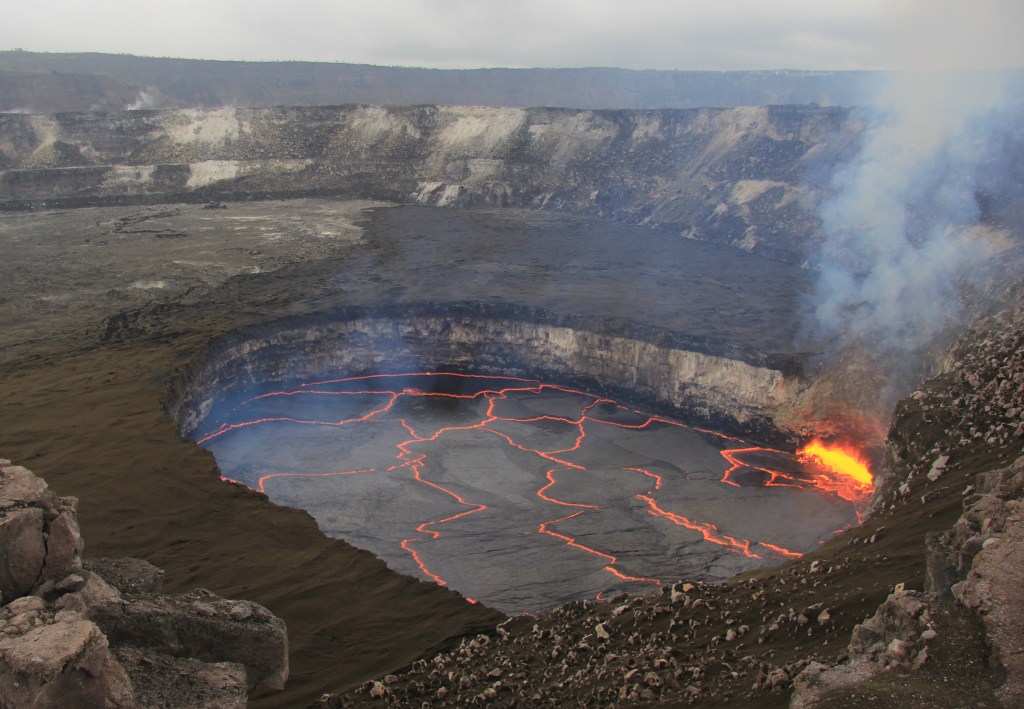
Kilauea is a powerful and awe-inspiring volcano that has been shaping the Hawaiian Islands for thousands of years. It is the youngest and most active volcano on the island of Hawai’i, and one of the busiest in the world. Hawaiian chants and oral traditions tell in veiled form of many eruptions fomented by an angry Pele, the Hawaiian volcano goddess, who is believed to make her home at Kilauea.
Located along the southeastern shore of the Big Island of Hawaiʻi, the volcano is between two of the other four volcanoes that make up the island – Mauna Loa and Hualalai. Kilauea is a shield-type volcano, formed from layers of hardened lava that have been blasted from its vents over time. It has more than two dozen craters, and its East Rift Zone (ERZ) has been intermittently active since 1983.
Kilauea’s Location
Kilauea is located on the southeastern side of the Big Island of Hawaii, bordered by Mauna Loa to the west and north, the Ka’ū Desert to the southwest, and ‘Āinahou Ranch to the south. It is also surrounded by a tropical fern jungle. With its latitude at 19.421° N and longitude at 155.287° W, Kilauea rises to a height of 4,009 feet (1,222 meters) above sea level. This makes it the youngest and most active volcano on the island and further makes it one of the most active volcanoes in the world.
Kilauea: A Shield Volcano
Kilauea is one of the most active volcanoes in the world and is a classic example of a shield volcano. Shield volcanoes are formed by the eruption of fluid lava, which is typically basaltic in composition. This type of eruption creates a broad, gently sloping cone-shaped volcano composed of dozens or even hundreds of layers of hardened lava. Kilauea’s summit caldera and East Rift Zone are both composed of these layers, and its signature long, shallow slopes are evidence of this type of volcanic formation.
Kilauea’s East Rift Zone
Kilauea’s East Rift Zone (LERZ) is a major source of volcanic activity for the Hawaiian Islands. Extending from the volcano’s summit, it is composed of two rift zones stretching to the east and southwest. This was the source of the destructive eruption in 1955, when lava flows between the East Rift and Mauna Loa erupted from a shield near Kilauea Iki.
In 2018, an eruption in the same area produced approximately one cubic kilometer of lava and extensive damage to the area. The most recent eruption started on December 23, 2025. For more information about Kilauea’s eruption status, check out the USGS Kilauea page. You can also see a live stream of Halemaʻumaʻu Crater here.
Kilauea’s Impact on Hawaii
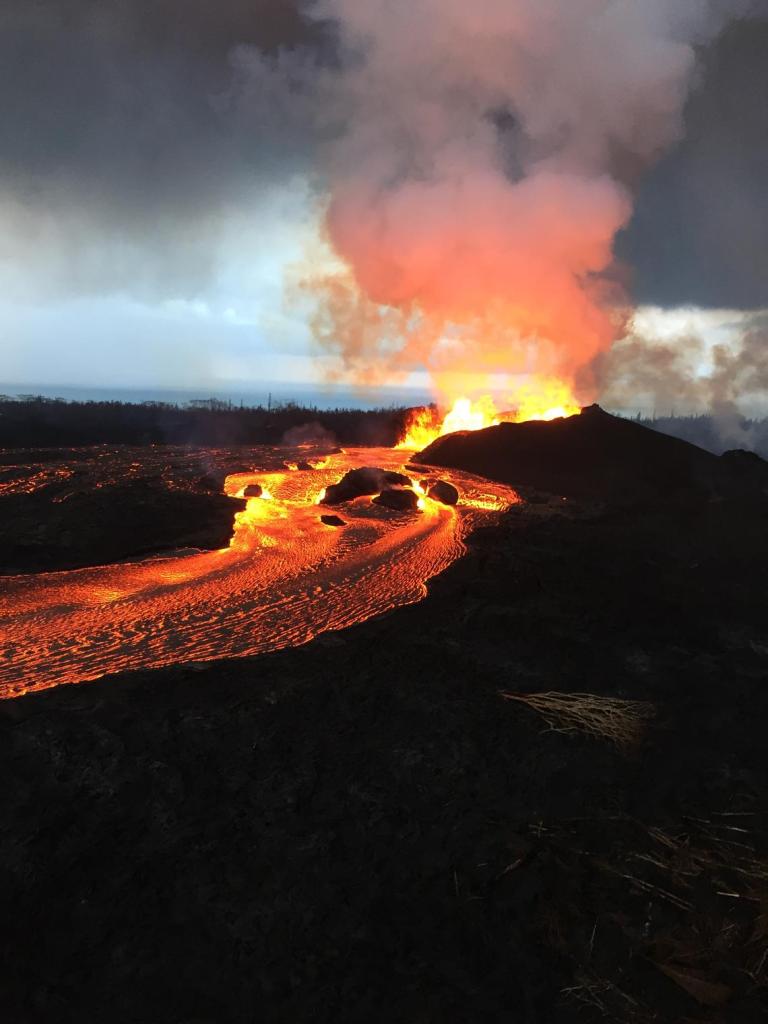
Kilauea’s destructive eruption of 2018 had a severe impact on Hawaii. Hundreds of homes were decimated and many citizens were displaced due to the eruption. Its summit collapsed to form a caldera which is a broad shallow depression nearly 3 miles (5 km) long and 2 miles (3 km) wide. The volcano emitted high levels of sulfur dioxide gas, a common threat posed by volcanic eruptions.
Additionally, lava flows, pyroclastic flows, and Kilauea’s ash plumes posed threats to the land, plants, animals, and people of Hawaii. In 2021, the United States Geological Survey updated Kilauea’s alert level from “Watch” to “Warning,” signifying the potential for increased volcanic activity.
Kilauea’s History of Eruptions
Kilauea is an active shield volcano located on the southeastern shore of the Big Island of Hawaii. Estimated to be between 210,000 and 280,000 years old, Kilauea has had a history of eruptions since 1952.
In 1983, eruptions began on Kilauea’s East Rift Zone, which created a four-mile-long fissure. This eruption continued for 35 years and created features such as lava flows, cinder cones, and fissures. The eruption also caused destruction in communities near the volcano.
Following the Pu’u ‘O’o eruption, Kilauea has experienced nearly continuous eruptions along its East Rift Zone. It is estimated that Kilauea has erupted over sixty times in this current cycle, covering nearly ninety percent of its surface in lava flows within the last 1000 years. While it is true that Kilauea has short periods of repose, it is an active volcano with an ongoing history of eruptions.
Kilauea’s Volcanic Features
Kilauea is an active shield volcano in the Hawaiian Islands. Located along the southeastern shore of the Big Island of Hawaiʻi, the volcano has numerous volcanic features including a 3 x 5 km caldera, more than two dozen craters, and an East Rift Zone (ERZ) that has been intermittently active since 1983.
In addition to these features, Kilauea also has a unique type of basaltic lava known as tholeiite, which is responsible for its shield building process. Kilauea’s tholeiite lava has created numerous features on the volcano’s surface, such as cinder cones, lava tubes and vents, and lava fields. These features have helped to make Kilauea one of the most active volcanoes in the world and have had a significant impact on the Big Island of Hawaii throughout its history.
Kilauea’s Relationship to Other Hawaiian Volcanoes
Kilauea is part of a family of five volcanoes, which are connected by lava saddles (ridges). Hualalai, Kilauea, Kohala, Mauna Kea, and Mauna Loa are the five volcanoes which make up the island of Hawaii. Historically, Kilauea has been viewed by many Native Hawaiians as the home of Pelehonuamea, the volcanic deity.
Interestingly, there is evidence that suggests that Mauna Loa and Kilauea may be tapping into the same deep magma source, as they seem to have alternating periods of dominant activity. This implies that the two volcanoes are somehow connected. The other three Hawaiian volcanoes have been dormant for long periods of time, with Hualalai last erupting in 1801, Kohala in 4500 BC and Mauna Kea in about 1000 BC. Although all five of these volcanoes have varying levels of volcanic activity, Kilauea is the most active out of the five.
The Future of Kilauea
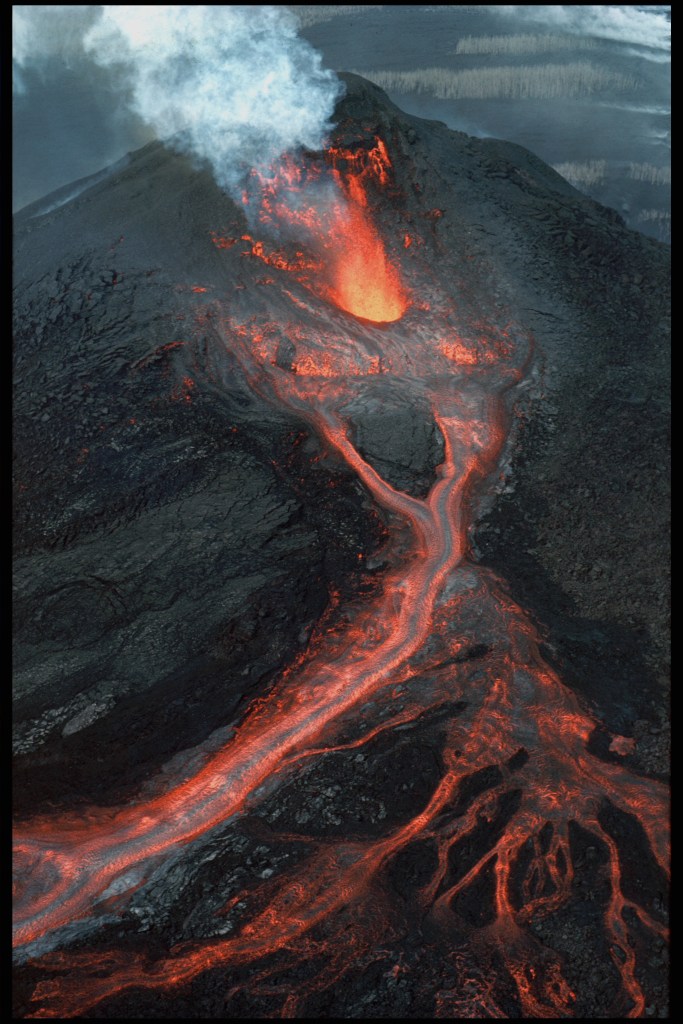
Kilauea is one of the most active volcanoes on Earth and its recent and current eruption began in September 2021. The eruption has been confined to the crater and the USGS Hawaiian Volcano Observatory issues updates on Kilauea’s activity.
Because much of the magma fueling Kilauea had erupted in 2018, the volcano is now recharging and is expected to erupt again in the future. In addition, Kilauea’s relationship with other Hawaiian volcanoes, such as Mauna Loa, can affect its activity. This means that the future of Kilauea is uncertain but will remain a potential threat to Hawaii for many years to come.
The Cultural Significance of Kilauea
Kilauea is an active shield volcano that sits on the southeastern shore of the Big Island of Hawaii. For centuries, Kilauea has been a part of Hawaiian culture and has been an integral part of Hawaiian mythology and religion. In Hawaiian folklore, the volcano goddess Pele is said to live within Kilauea, and the eruptions are believed to be her work. Kilauea’s eruptions have been recorded for hundreds of years, with the most destructive eruption occurring in 1955.
Despite the destructive power of the volcano, it has been a source of renewal for the Hawaiian people, with its eruptions being seen as a sign of fertility and abundance. Through its long history, Kilauea has become an important symbol to the people of Hawaii and has become an integral part of their culture and identity.
 Big Island Blog