If you’re looking for a place of breathtaking beauty and rich history, look no further than Waipiʻo Valley. Located on the Big Island of Hawaii, this lush valley offers stunning views of cascading waterfalls and ancient Hawaiian ruins. Let’s take a closer look at what makes Waipiʻo Valley so special.
An Overview of Waipi’o Valley
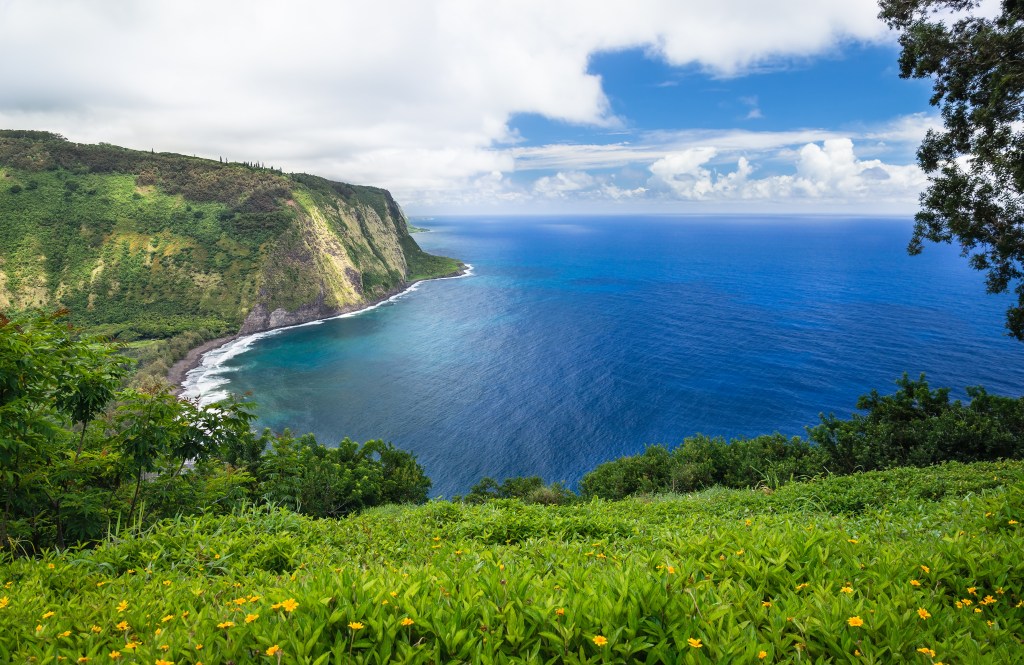
Located along the Hamakua Coast on the northeastern coast of the Big Island of Hawai’i, Waipi’o Valley is the largest and southernmost of the seven valleys. The valley is deeply cut into the mass of Kohala mountain, with three thousand-foot cliffs and some waterfalls up to fifteen-hundred feet. From the opposite side, you can see the steep Waipi’o Valley access road, the black sand beach, and taro fields that flourished in this fertile land.
Waipi’o Valley is quite impressive in size: a mile wide at the shoreline, six miles deep and with cliffs reaching 2,000 feet (610 metters) in height. This scenic area of waterfalls and thousand foot cliffs is a remarkable sight to behold. There are also many lush green foliage and several lush natural wonders to explore in this remote section of Hawaii.
The Meaning of Waipi’o
The name Waipi’o is derived from the Hawaiian language, meaning “curved water.” This name accurately describes the twisting river that flows through the valley, as well as its stunning view of the ocean. Waipi’o is a place of indescribable beauty and great historical significance, having an important role in Hawaiian culture and being connected to King Kamehameha I. The valley has lush green foliage, several waterfalls, and majestic mountain views, making it a truly incredible place to visit.
Waipi’o’s Place in Hawaiian Culture
Waipi’o Valley holds a special place in Hawaiian culture and religion. For centuries, Waipi’o served as a center of power and was home to Hawaiian kings, including King Kamehameha I. It was also an important spiritual site, as evidenced by its seven heiau (temples) and abundance of lo’i (taro patches). As a result, the valley has remained sacred to many Hawaiians for generations. Today, the valley is a reminder of Hawaii’s rich cultural heritage.
Water’s Physical Characteristics
Waipi’o Valley is an impressive site to behold. It is a lush green valley, a mile wide at the shoreline and six miles deep, with cliffs reaching 2,000ft (610m) in height. The valley is located in the Hamakua District of the Big Island of Hawaii and is traversed by the meandering Wailoa Stream, which gives it the name Waipi’o – meaning “curved water” in the Hawaiian language. This fertile valley serves as a reminder of the power of nature in shaping the landscape. Not only is it visually stunning, but it has a long and rich history that is deeply embedded in Hawaiian culture.
The History of Waipi’o
The history of Waipi’o Valley is as rich and varied as its scenery. Once the home of a large native community, Waipi’o is the birthplace of many Hawaiian legends and was the boyhood home of King Kamehameha the Great. The valley was also once the capitol city and home for many Hawaiian chieftains.
With its stunning waterfalls, lookouts, lush green foliage, and numerous hiking trails, Waipi’o Valley has been a destination for adventurers long before modern times. Today, the area is recognized for its cultural significance and natural beauty, and continues to be an important part of Hawaiian culture and history.

The Sacredness of Waipi’o Valley
Nestled on the northeastern coast of the Big Island of Hawai’i, Waipi’o Valley is a place of stunning natural beauty and rich cultural significance. This sacred place has a significant role in Hawaiian culture and religion. Since ancient times, Waipi’o Valley served as capitol city and home for old Hawaiian kings and was an important center for political and religious life.
The easternmost and largest of the seven windward valleys of Kohala Mountain, Waipi’o is the “Valley of the Kings.” Meaning curved water in the Hawaiian language, Waipi’o is home to wild horses, features mule-drawn wagon tours, and is considered sacred by many. Hawaii County recently restricted access to all valley trails due to visitor safety concerns. Once again, we look forward to taking part in the discussion relating to the future of sacred Waipi’o Valley.
Waipi’o’s Connection to King Kamehameha I
The sacred Valley of the Kings, Waipi’o, is deeply connected to King Kamehameha I. In 1780, Kamehameha the Great received his war god Kukailimoku at Waipio Valley and was declared the future ruler of all the Hawaiian Islands. It was off the coast of Waimanu, near Waipio, that Kamehameha engaged Kahekili, the Lord of the leeward islands, and his half-brother. King Kamehameha was one of the most striking figures in Hawaiian early years and was secluded in Waipio until he returned to Kailua at the age of five. Today, Waipi’o Valley is a sacred place for Native Hawaiians and continues to be a symbol of strength and unity for all Hawaiians.
The Natural Wonders of Waipi’o
The Natural Wonders of Waipi’o is one of the main reasons why many people visit the valley. Its lush green foliage, majestic views, and plunging waterfalls are some of the most breathtaking sights in Hawaii. And its black sand beach, cut in two by the river, is a sight to behold.
Waipi’o Valley is home to a variety of rare and endangered species and its flora and fauna make it an ideal destination for nature lovers. From the awe-inspiring beauty of the valley’s cliffs to its cascading waterfalls, it’s no wonder why Waipi’o Valley has been dubbed “the Valley of the Kings”.
The Human Impact on Waipi’o Valley
Waipi’o Valley has had a long and significant history of human settlement, and is still a popular tourist destination today. However, the human impact on this sacred place has not been without consequence. In 2019, the road leading to the valley was closed due to safety hazards caused by rockfall. The government is currently preparing plans to address the existing conditions in Waipi’o Valley and to identify key issues and concerns. A Final Environmental Impact Statement was published in 2020 with the aim of restoring the valley’s natural beauty while maintaining its cultural significance.
Additionally, Hawaii County has restricted access to all vehicles in order to preserve the valley’s pristine environment. Unfortunately, this has limited access to the incredible natural wonders found within Waipi’o Valley, such as its black sand beach. However, visitor access is possible as part of a tour, so that people can experience this beautiful valley in a respectful and responsible way.

Visiting Waipi’o Valley
Visiting Waipi’o Valley is a unique experience that requires special conditions to be met. Access to the valley floor is only possible as part of a tour, and Waipiʻo Valley Road is closed to non-residents and visitors. The beautiful vista from the Waipio Valley Overlook on the Hamakua Coast is more than just a great photo opportunity as it serves as a mandatory visit for those heading to Waipio Valley. From here you can admire the deep green encrusted cliffs, some waterfalls up to fifteen-hundred feet, and the valley floor carpeted by the black sand beach.
 Big Island Blog